Location
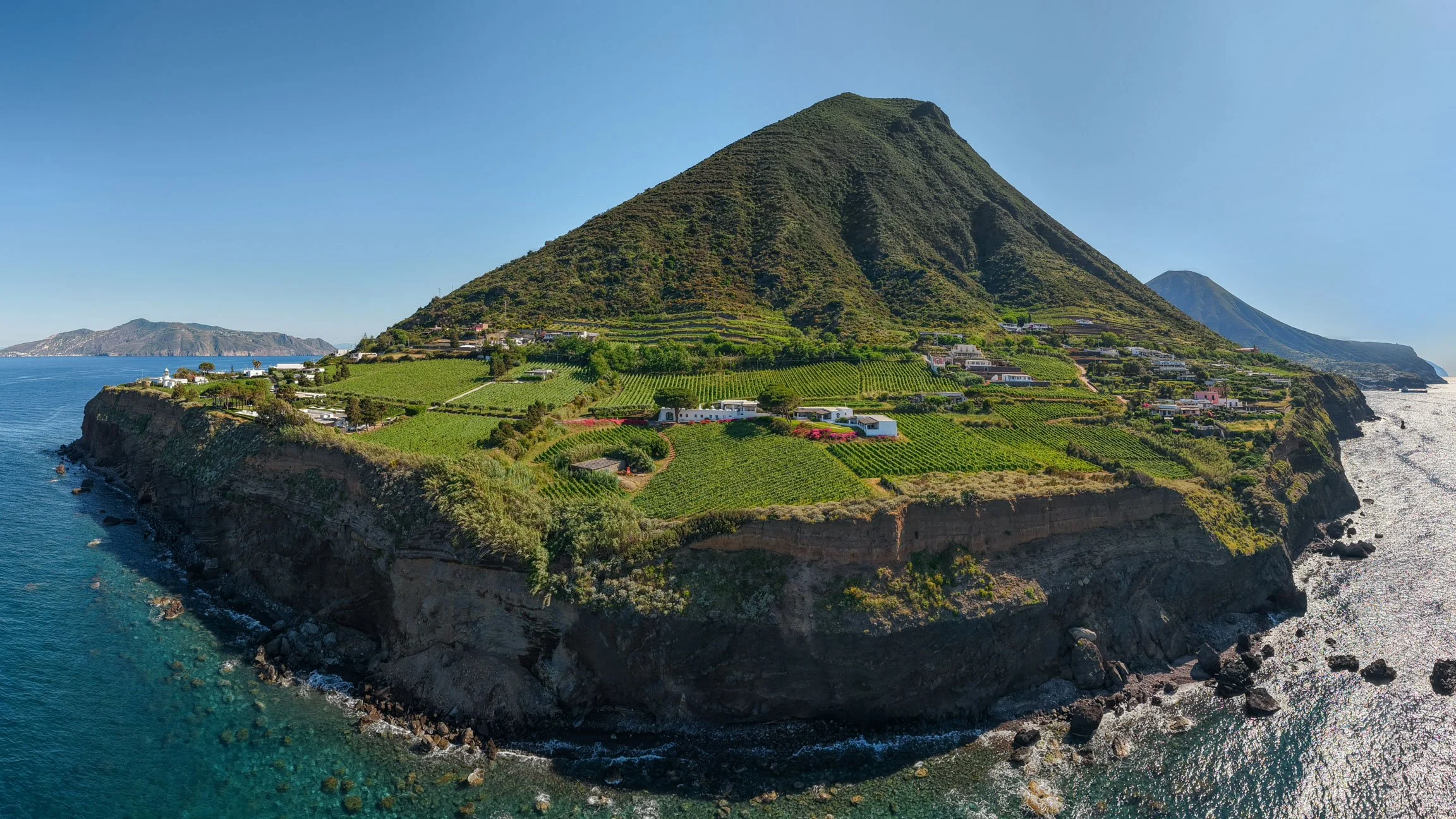
At the heart of the Aeolian archipelago lies Salina, the islanders affectionately call the green pearl. Lush, fertile and serene, Salina rises between sky and sea, perfectly positioned at the centre of the seven sisters, an ideal starting point for exploring the archipelago in every direction.
Sicily
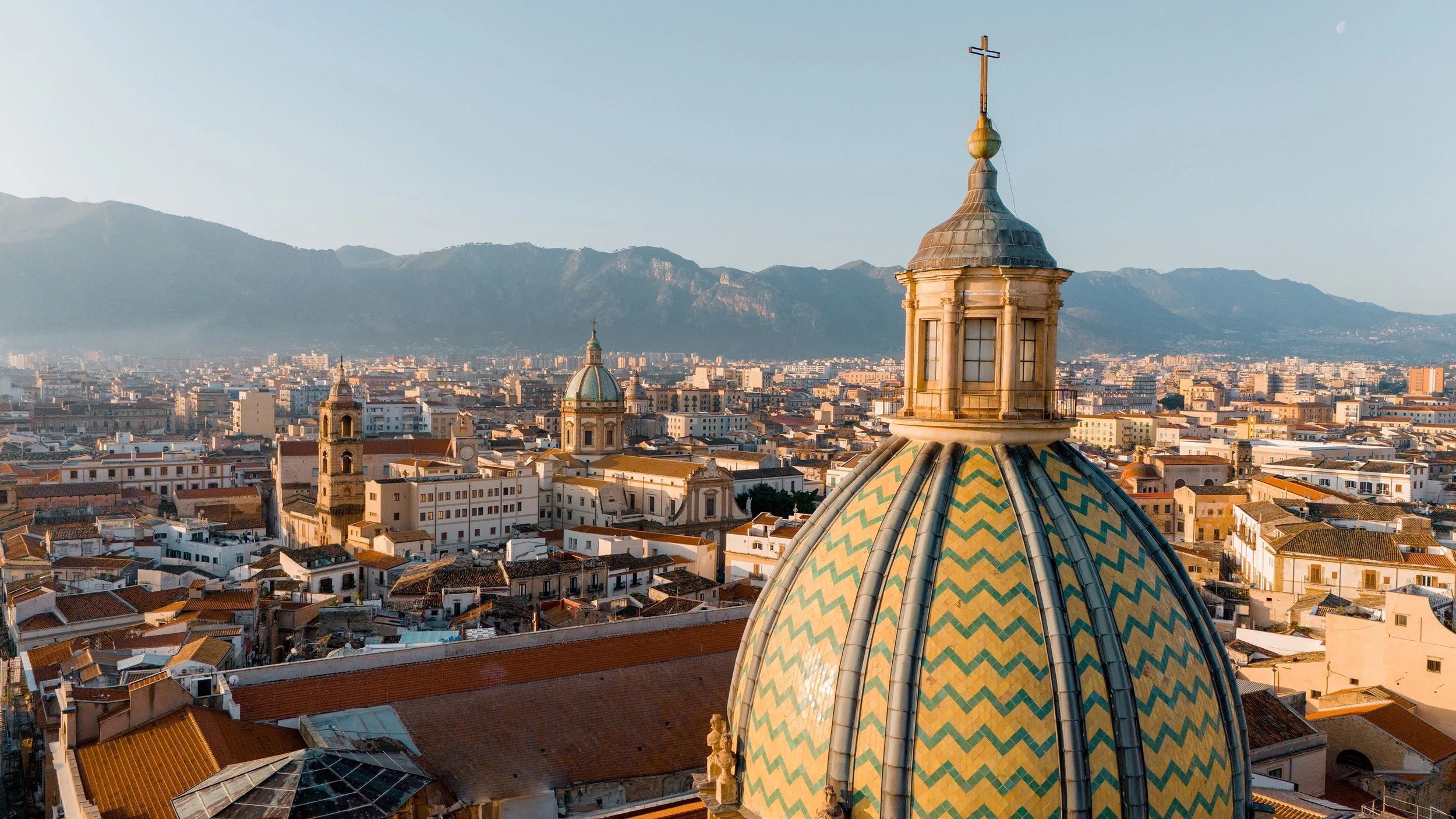
Sicily is a land of contrasts, where crystal-clear seas meet volcanic soil, and centuries of history, culture, and tradition are written in every stone, every street, and every sun-drenched terrace. Here, light and colours define the landscape: white cliffs merge with emerald waters of the coast, while golden hills etched with vineyards and citrus groves echo the bounty of the land. Above all stands the majestic silhouette of Mount Etna, watching over the island with ancient grace.
Every corner of Sicily whispers a story, of civilisations that have shaped its soul, of the richness of the land, and of the generosity of the people. This is a place where each vista lingers as a cherished memory, each play of light a masterpiece, and every moment spent among its hills, islands, and shores is a celebration of the eternal beauty.
Aeolian Islands
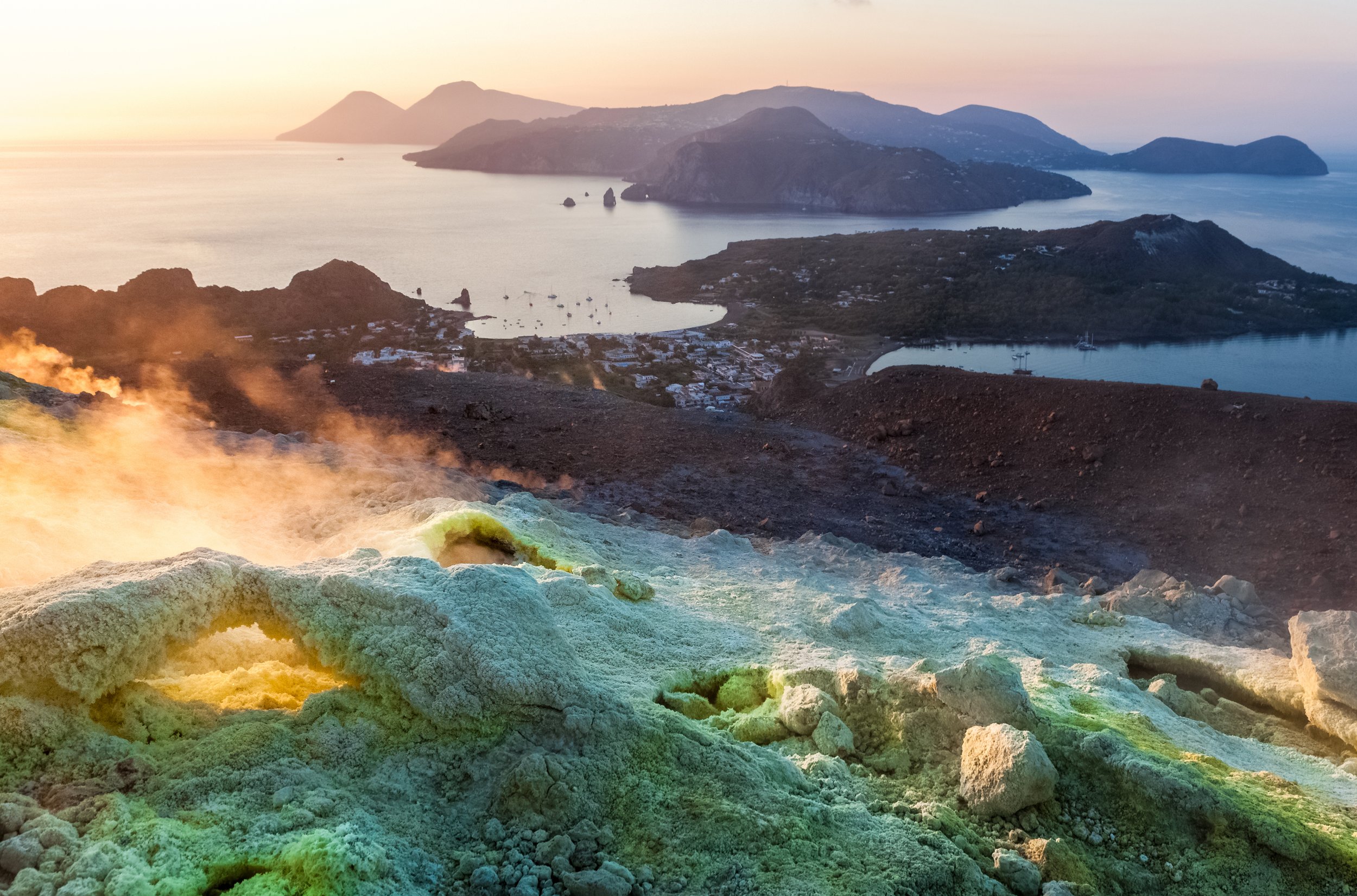
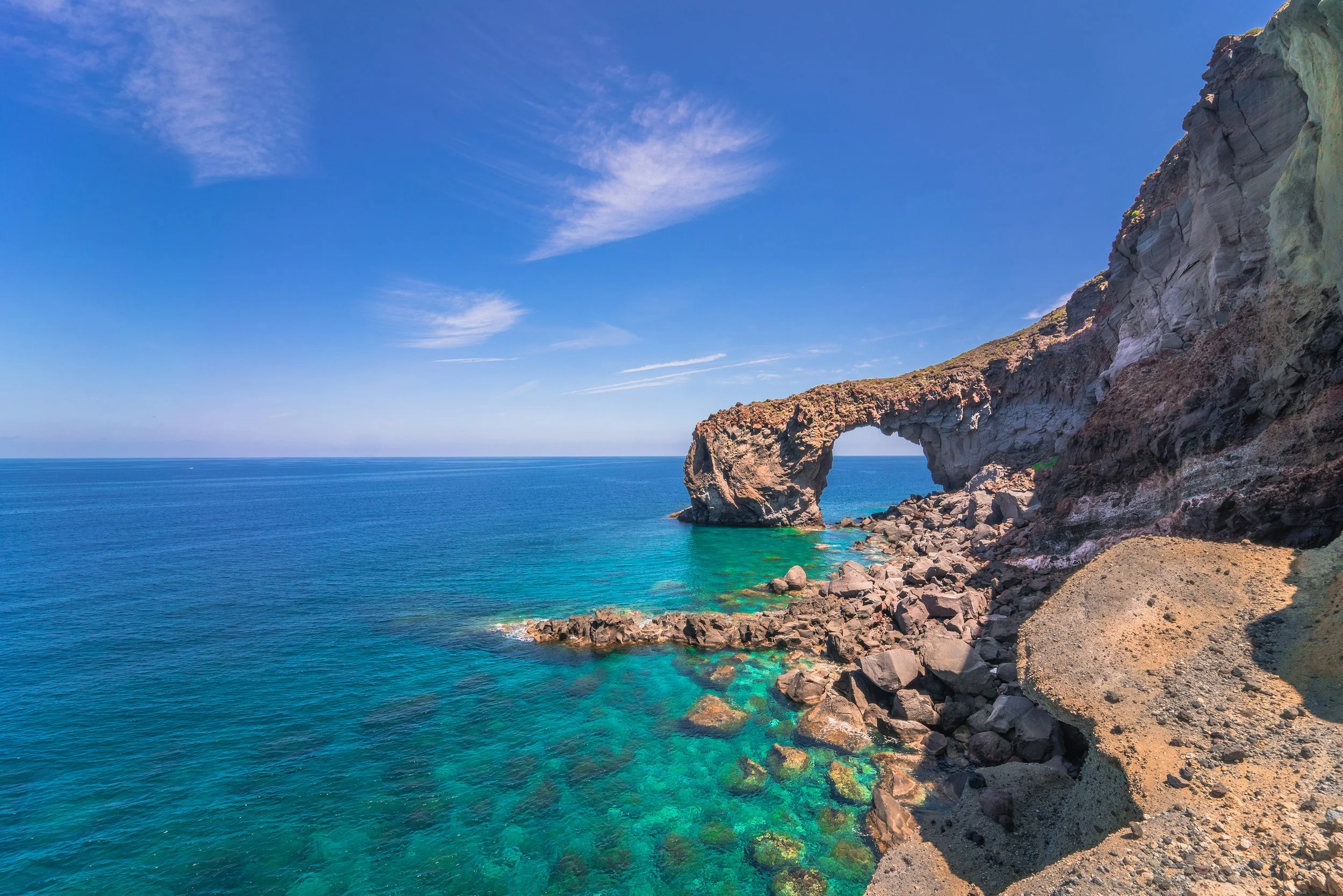
Just off the northern coast of Sicily, the seven volcanic gems of the magnificent Aeolian Islands rise from the sea – an archipelago forged by wind, wave and fire. The wind sculpts their cliffs, the sea polishes their shores, and fire pulses deep within, in the heart of actives volcanoes. Over millennia, nature has painted each island with its own distinct colours and temperament, giving the archipelago an almost mythical identity.
Since the year 2000, the Aeolian Islands have been honoured as a UNESCO World Heritage Site, recognised for their exceptional geological narrative. Their volcanic formations are more than just dramatic landscapes; they are living laboratories. Indeed, Lipari, Vulcano, Salina, Stromboli, Filicudi, Alicudi and Panarea have been studied since the 18th century and have given their name to two fundamental kinds of volcanic eruptions: Vulcanian (after Vulcano) and Strombolian (after Stromboli).
Amid geology and legacy, the Aeolian Islands offer infinite possibilities for embracing time and sensations. Lose yourself in moments of pure rest, sitting on a dark volcano rock at sunset, listening to the sea’s breath, or seek adventure: sailing between fiery craters, guided treks to scent-filled fumaroles, diving the underwater cliffs, or simply savouring the local flavours of capers and Malvasia wine.
Salina, the green pearl of the Aeolian Islands
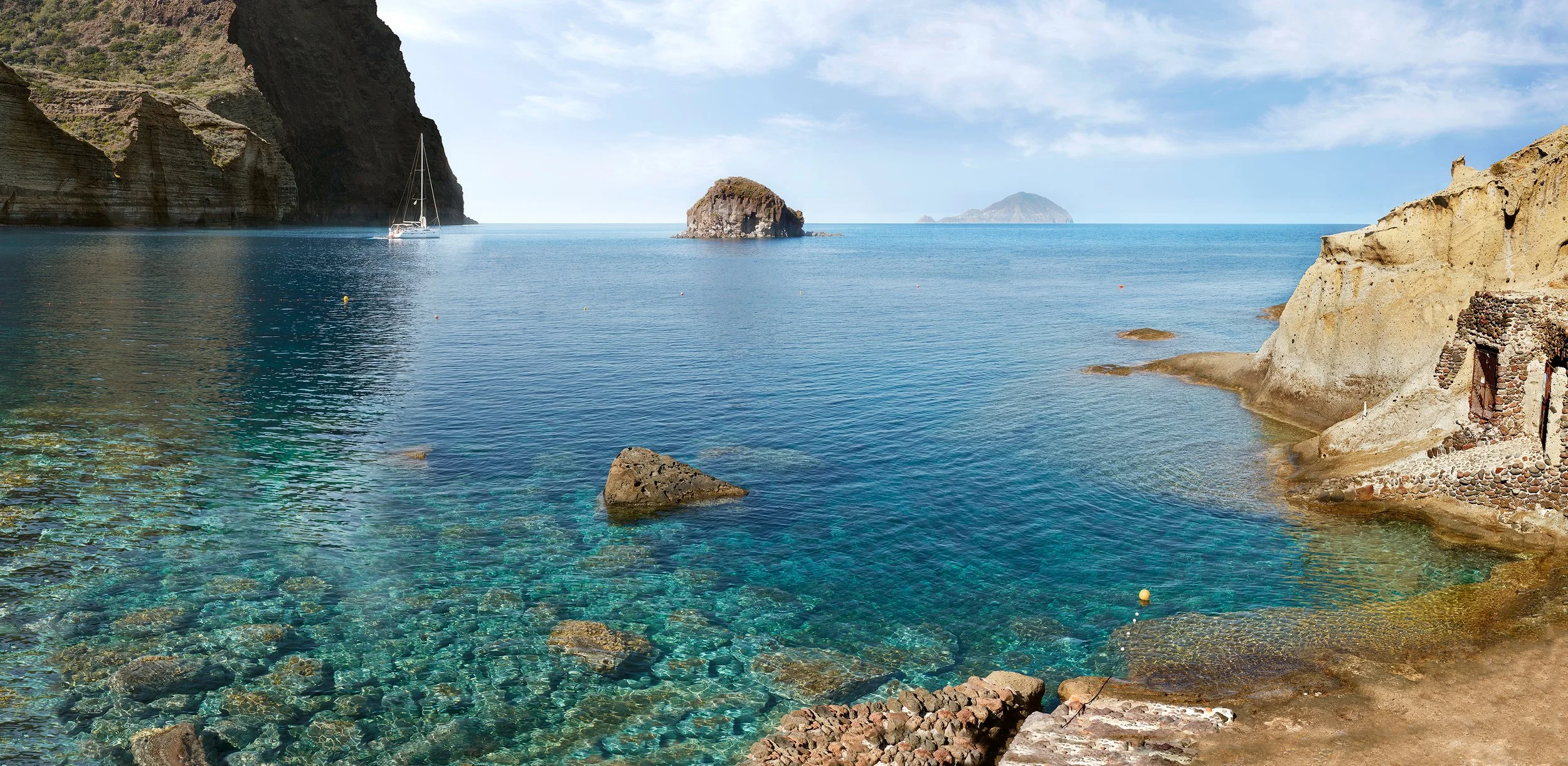
At the heart of the Aeolian archipelago lies Salina, the islanders affectionately call the green pearl. Lush, fertile and serene, Salina rises between sky and sea, perfectly positioned at the centre of the seven sisters, an ideal starting point for exploring the archipelago in every direction.
Once called Didyme, “the twin,” for its iconic double volcanic peaks, Salina’s story is as rich and evolving as its landscape. It became Salina in reference to the small saltwater lake of Lingua, a fisherman’s hamlet on the south-eastern tip of the island. From this small lagoon, salt was extracted and used to preserve capers, fish and flavours that still define the island.
Salina is known for its exceptional-quality capers and sweet, amber Malvasia wine, and is an island where traditions breathe life into the landscape. It is also uniquely divided into three municipalities within its 27 sqm: Santa Marina, Malfa and Leni.
The island does not have a single road that fully circumnavigates the island coastline, but a single route that glides along scenic coast and hills, guiding travellers out and back along the same path. Perhaps this is part of its charm. Salina is not a place to 'pass through', but a place to return to again and again.
Click on the map to zoom
How to get there
Reaching Salina is easier than you might imagine. The recommended airports are Catania, Palermo, and Reggio Calabria, each offering travel options, allowing you to tailor your arrival depending on the season and your own rhythm of travel across Sicily.
Catania Fontanarossa is the closest and most convenient gateway, providing seamless connections to the Aeolian archipelago. From here, guests travel by private taxi, shared shuttle, or public bus, each carving a scenic route to the port of Milazzo in about two hours. Once in Milazzo, a hydrofoil glides you across the sea to Salina’s port, Santa Marina. To ensure a smooth arrival on the same day, it is best to touch down in Catania by 3 p.m.
Those arriving in Palermo can reach Milazzo either by private taxi or by train. In summer, travellers have the added option of a direct hydrofoil to Salina, a route that weaves through Rinella and Santa Marina, with panoramic views and an effortless sense of discovery.
Travellers who choose to fly into Reggio Calabria can either catch the direct hydrofoil to Salina or travel to Messina, where there either embark on a daily hydrofoil or continue by private transfer or public bus to Milazzo for one of the more frequent crossings.
Another seasonal route connects the island with Naples, offering a daily hydrofoil or a slower voyage by ship sailing a couple of time a week throughout the year, for those wishing to reach the Aeolian islands directly from the mainland.
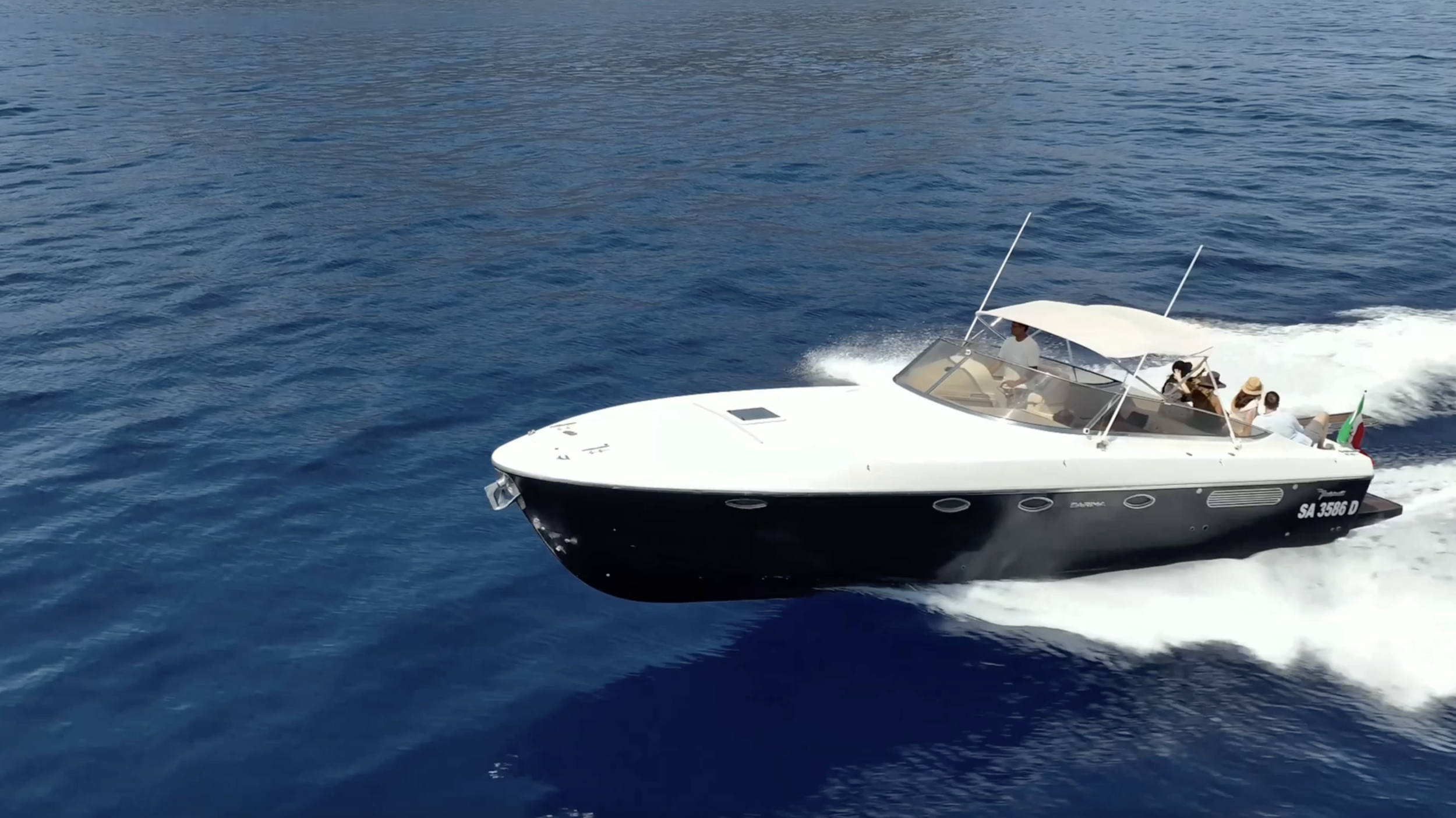
For guests seeking the most exclusive and swift transfer, Salina is only a short flight by helicopter from Catania, Milazzo or Reggio Calabria, offering an unforgettable aerial introduction to the archipelago. Alternatively, guests can indulge in an intimate seaborne arrival by private boat from the ports of Capo d’Orlando, Porto Rosa and Milazzo.
However you choose to arrive, the varied journeys to Salina are already part of its enchantment. The reception team at Capofaro remains fully available to assist with every detail: organising transfers, coordinating schedules, and ensuring a seamless arrival and departure to your island story.